Maintaining an energy-efficient, leak-free commercial facility in Central Alabama demands a flat roofing system engineered to withstand intense summer thermal loads, severe storm fronts, and heavy UV exposure. At Quality Architectural Metal & Roofing, we specialize in system-level TPO (Thermoplastic Polyolefin) roofing installation, repair, and complete re-roofing for commercial, industrial, and institutional properties throughout Metro Birmingham.
Since 1984, our Birmingham-based team has provided code-compliant, manufacturer-certified single-ply membrane installations tailored to the specific structural and insulation requirements of local building owners. Whether you operate a distribution warehouse in Bessemer, a medical facility in Downtown Birmingham, or a retail center in Hoover, we deliver durable TPO roofing solutions engineered for long-term protection and maximum energy savings.
What Is TPO Roofing?
TPO stands for thermoplastic polyolefin. Despite the name, it is not a plastic in the conventional sense — it is a blend of polypropylene and ethylene-propylene rubber, manufactured as a flexible sheet and produced to the ASTM D6878 standard for thermoplastic polyolefin-based sheet roofing.
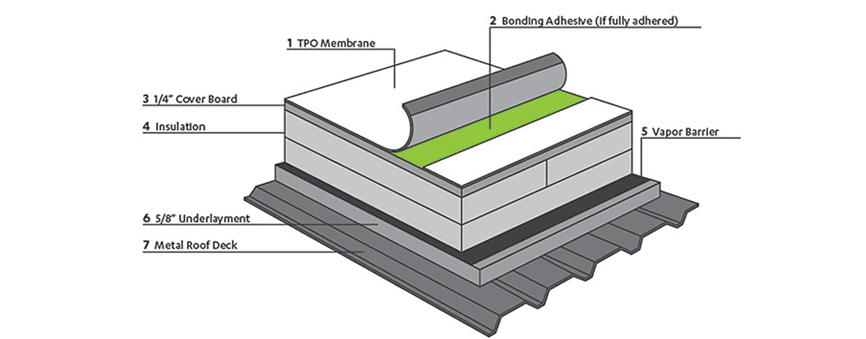
A TPO roof is a system, not just a membrane. A typical assembly includes the structural deck, a vapor retarder where the building’s use requires one, rigid insulation sized to meet code R-value, a cover board, and the TPO membrane itself — plus the flashings, edge metal, and drain details that determine whether the roof actually lasts.
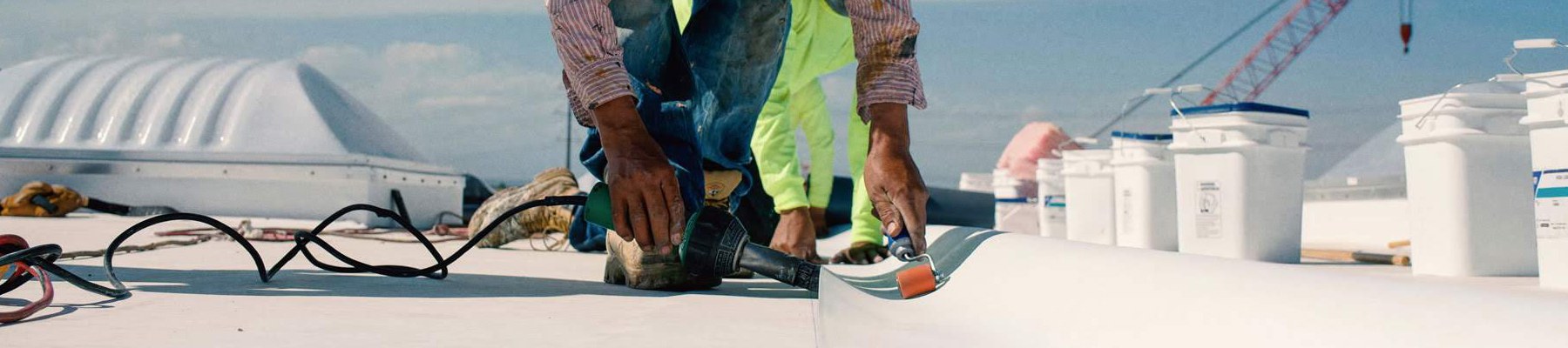
How TPO Seams Are Welded
This is what separates TPO from adhesive-seamed systems. TPO seams are joined with hot air, which fuses the two sheets into a single piece of material. A properly welded seam is generally stronger than the membrane on either side of it, and there is no adhesive to dry out, shrink, or fail over time.
Weld quality is entirely a function of crew skill and equipment calibration — welder temperature, speed, and pressure all have to be right for the ambient conditions on the day of install. It is the single biggest variable in whether a TPO roof performs for two years or twenty.
TPO stands for thermoplastic polyolefin, a single-ply roofing membrane that covers the surface of the roof. The name is a bit misleading, because rather than being a plastic, TPO is actually one of a few different types of rubber, usually a blend of polypropylene and ethylene-propylene rubber.

Frequently Asked Questions About TPO Roofing in Birmingham
How long does a commercial TPO roof last in Alabama?
A professionally installed TPO roofing system typically lasts between 20 and 30 years, depending on membrane thickness (45 mil, 60 mil, or 80 mil), installation quality, and adherence to routine preventative maintenance.
What does TPO stand for?
TPO stands for thermoplastic polyolefin, a single-ply commercial roofing membrane made from a blend of polypropylene and ethylene-propylene rubber.
Can a TPO roof be installed over an existing flat roof?
Yes. If the existing roof structure is structurally sound and free of wet or saturated insulation, a TPO recover system can be installed over an existing EPDM, modified bitumen, or built-up roof. This approach saves high tear-off costs and reduces waste while improving the building’s thermal R-value.
Can a TPO roof be repaired?
Yes. Because TPO is thermoplastic, new membrane can be heat-welded directly to existing membrane, producing a repair that is integral to the roof rather than patched on top of it. See our commercial roof repair services.
What membrane thickness is recommended for commercial TPO?
While 45 mil is the entry-level standard, we strongly recommend a 60 mil or 80 mil TPO membrane for commercial properties in Central Alabama. Thicker membranes provide enhanced puncture resistance against hail, flying storm debris, and foot traffic from HVAC maintenance technicians.
Request Info

Quality Architectural Metal & Roofing, Inc has served the Southeast since 1984.

Quality Architectural Metal & Roofing, Inc has served the Southeast since 1984.